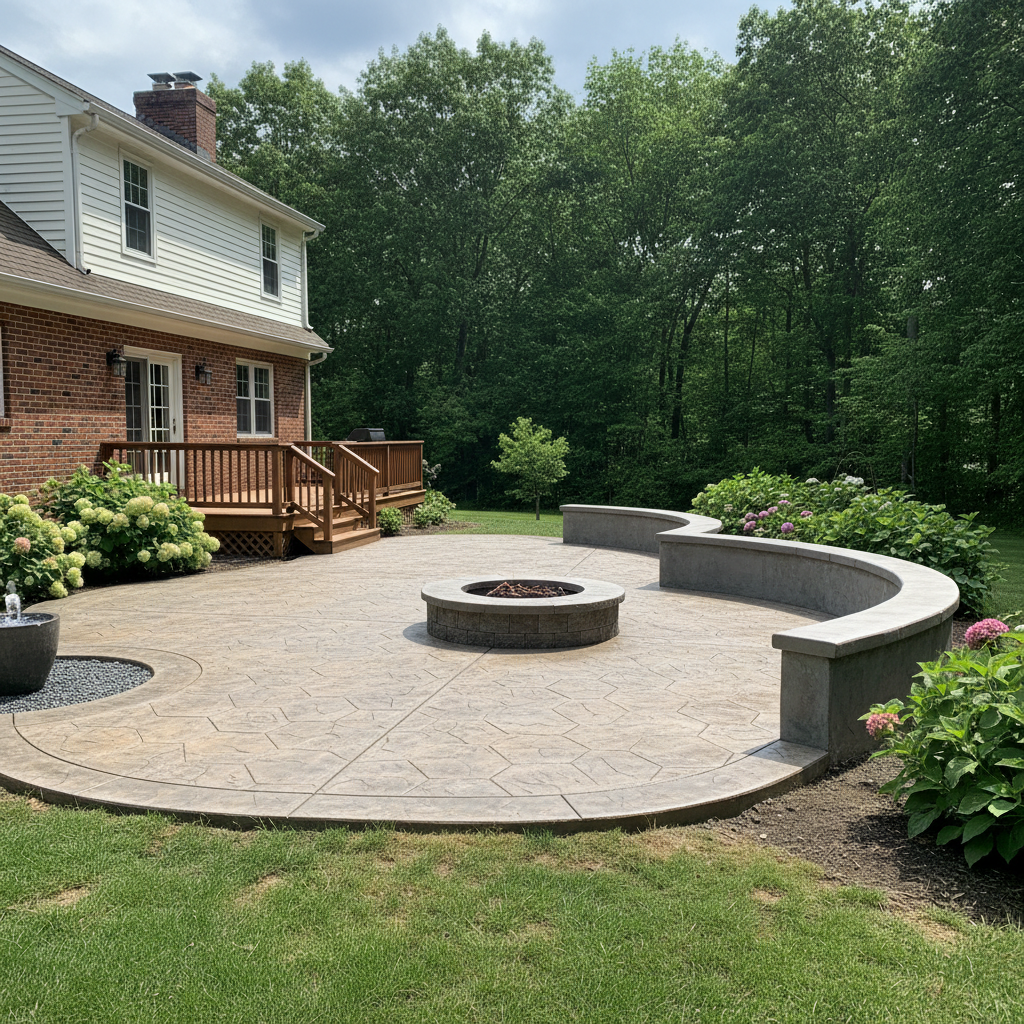
Backyard patios in Pawtucket, Rhode Island sometimes look pristine for decades while others start cracking and sinking after just one New England winter. Pawtucket Concrete & Masonry sees many homeowners get excited about picking out shapes and stamp patterns while overlooking the important details that keep the concrete slab from falling apart.
Homeowners planning an outdoor living space want it to last. Pawtucket Concrete & Masonry reviews the biggest mistakes people make when mapping out and contracting a concrete patio project around Pawtucket, RI, and how you can avoid them.
Skimping on Sub-Base Depth and Compaction
The single biggest mistake happens before a single drop of concrete gets mixed. Local soil in Pawtucket, Rhode Island has plenty of clay and moisture, which means it expands and contracts when we cycle through freezing and thawing temperatures. If a contractor pours four inches of concrete over bare dirt or a thin, uncompacted layer of crushed stone, your concrete patio is guaranteed to shift.
- Always ask what depth of crushed gravel sub-base is going down.
- Make sure mechanical plate compactors are used in lifts, not just a hand tamper.
- Skipping this step leads directly to cracked concrete slabs and uneven tripping hazards.
Ignoring Proper Drainage and Pitch
Water has to go somewhere, and it should not be pooling against your home foundation or sitting in a giant puddle right in the middle of your seating area. A concrete patio needs a precise slope, usually about an eighth to a quarter inch per foot, away from the house. Some crews pour dead-level slabs just because they are easier to eyeball, leaving you with standing water every time it rains in Pawtucket, RI.
Falling for the Lowest Bidder Trap
Everyone likes saving money, but concrete work is one of those trades where you get what you pay for. If you get three quotes and one is thousands lower than the rest, somebody is cutting corners. Usually, that means they are using sub-par concrete mixes that lack proper air entrainment for freeze-thaw resistance, or they are skimping on steel reinforcement mesh and fiber. Do not let a cheap quote saddle you with a crumbling concrete patio that you have to rip out in five years.
Rushing the Cure Time
Concrete does not dry; it cures through a chemical process that takes time. Pawtucket Concrete & Masonry sees homeowners eager to drag heavy patio furniture, fire pits, and grills onto a brand-new slab two days after the pour. Give it at least a week of curing, and keep it damp if the summer sun in Pawtucket is baking it too fast. Taking it slow ensures the concrete reaches its maximum structural strength.
Taking the time to plan your project right and hiring a crew that respects our local climate will save you from endless headaches. Do your homework upfront, ask tough questions about the sub-base, and make sure your investment is built to handle whatever winter throws at it in Pawtucket, RI.