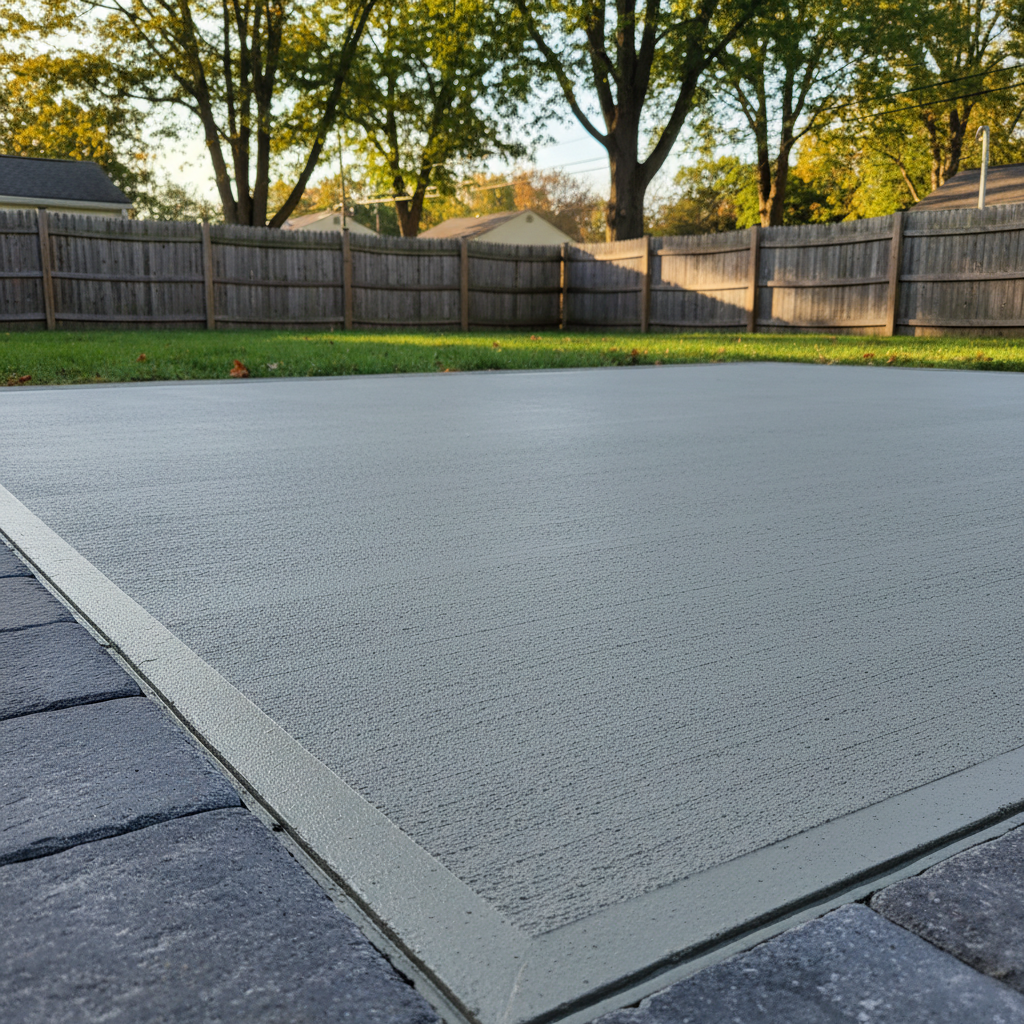
So, you're thinking about putting in some new concrete flatwork around your Pawtucket home, huh? Maybe a new patio for those summer cookouts, a walkway that doesn't trip you up, or a fresh slab for your shed. It's a common project, and I get a lot of calls about it. The big question I hear is always, "Can I do this myself, or should I call someone?" Let's break it down.
Before You Even Think About Pouring
First off, planning is everything. Don't skip this step, or you'll regret it. What's the purpose of this concrete? A simple garden path is way different from a driveway that's going to hold a heavy truck. You need to think about drainage. Pawtucket gets its share of rain, and you don't want water pooling up against your foundation or creating puddles on your new surface. Proper slope is critical – we're talking about a quarter-inch per foot, minimum, away from any structures.
Then there's the site prep. This is where a lot of DIYers get in over their heads. You've got to excavate the area, clear out all the old stuff – grass, roots, rocks. You need a stable subgrade. If your soil is soft or has a lot of clay, like some of the areas near the Blackstone River, you might need to dig deeper and bring in some gravel or crushed stone to create a solid base. Compaction is key here; you can rent a plate compactor, but it's hard work. If your base isn't solid, your concrete will crack. It's not a matter of if, but when.
Permits? Yeah, you probably need one. For anything structural or a certain size, the City of Pawtucket will want to know about it. Check with the building department. It's a hassle, I know, but it saves you bigger headaches down the road.
During the Pour: This Is Where It Gets Tricky
Okay, let's say you've done all your prep work perfectly. You've got your forms built, they're level, square, and strong enough to hold wet concrete. Now comes the pour. This is where most homeowners realize they're in over their heads. Concrete waits for no one. Once that truck shows up, you're on the clock.
Mixing small batches for a tiny patch? Sure, you can do that with bags from the hardware store. But for anything bigger than a small step, you're going to need a concrete truck. And when that truck arrives, you need a crew. You can't pour, spread, screed, float, and finish a decent-sized slab by yourself. It takes multiple people working fast and knowing what they're doing. You need to work the concrete, get it level, remove air bubbles, and then start the finishing process.
Finishing is an art form. You've got to wait for the concrete to set up just right – not too wet, not too dry – before you can start floating and troweling. If you do it too early, you'll bring too much water to the surface, weakening it. Too late, and it's like trying to smooth a rock. Getting a smooth, durable, and attractive finish takes practice and specialized tools. Hand tools are fine for small areas, but for a whole patio, you'll want a power trowel, and those aren't exactly beginner-friendly.
This is usually the point where I tell folks, "Look, if you're doing anything more than a small stepping stone, you're probably better off calling Pawtucket Concrete & Masonry." We've got the crew, the tools, and the experience to get it done right, fast. We deal with the logistics of ordering concrete, scheduling the truck, and making sure it's poured and finished correctly the first time.
After the Pour: Curing and Care
So, let's say you somehow managed to get the concrete poured and finished. You're not done yet. Curing is just as important as the pour itself. Concrete doesn't just dry; it cures, which is a chemical process that strengthens it. You need to keep it moist for at least 7 days, sometimes longer depending on the mix and the weather. This means covering it with plastic, or burlap that you keep wet, or using a curing compound. If it dries out too fast, it'll be weak and prone to cracking.
Protect your new concrete. Keep heavy loads off it for a few weeks. Don't let vehicles drive on it for at least a month. And in the winter, be careful with de-icing salts. Some salts can damage new concrete, especially if it wasn't mixed or cured properly. Use sand or a concrete-safe de-icer.
Look, I'm all for homeowners tackling projects. It's satisfying. But concrete flatwork, especially anything of significant size or importance, is one of those jobs where the learning curve is steep and the mistakes are permanent and expensive to fix. If you're doing a small, decorative pad, go for it. For anything that needs to last, hold weight, or look good for years, you're usually better off trusting it to someone who pours concrete every day. It'll save you time, money, and a whole lot of frustration in the long run.