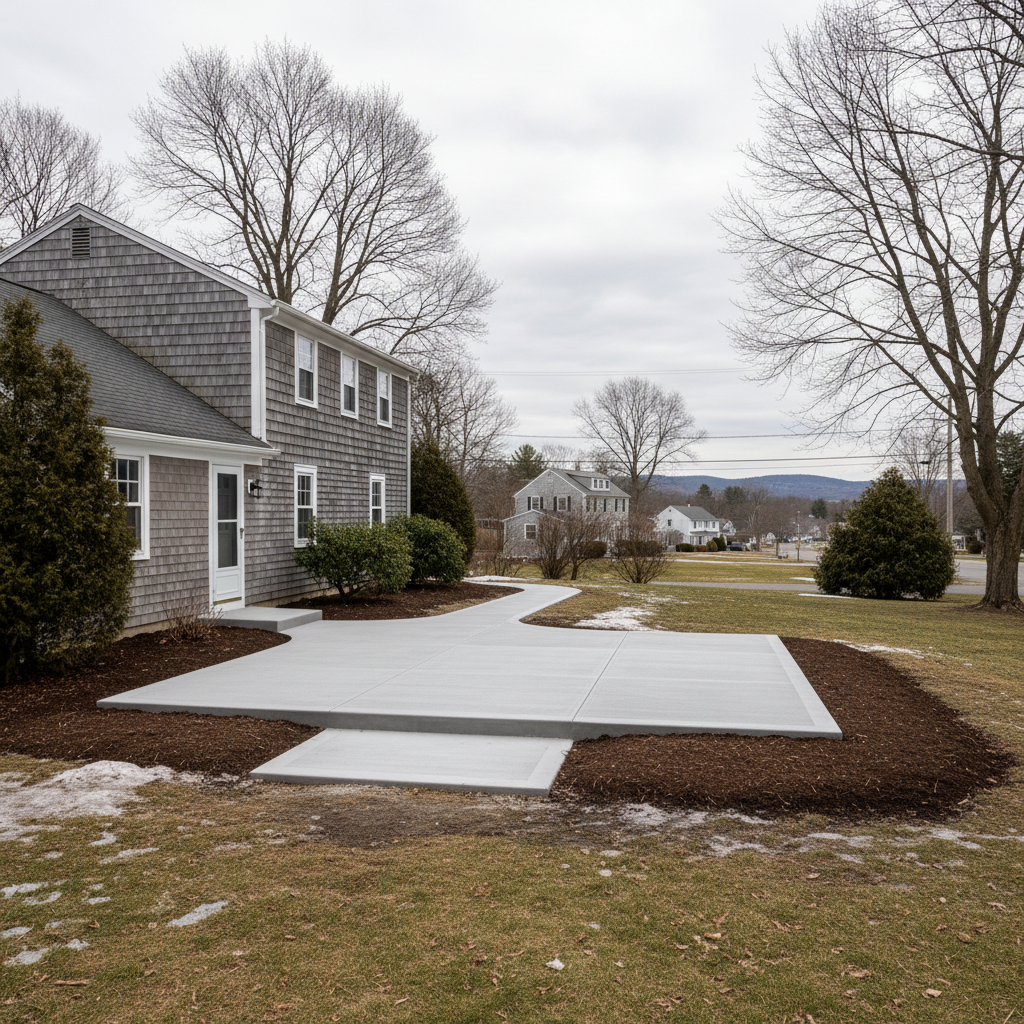
You're thinking about a new patio, driveway, or walkway, right? Maybe you've seen some cracks forming in your old concrete and you know it's time for an upgrade. One of the biggest questions I get from homeowners around here is, "When's the best time to do this?" It's a good question, because in Pawtucket, our weather isn't always playing nice, and that really affects how well concrete sets and cures.
When to Schedule Your Concrete Project
Honestly, timing is everything with concrete flatwork. You can't just pour concrete whenever you feel like it and expect it to last. The ideal temperature range for pouring concrete is usually between 50 and 80 degrees Fahrenheit. That gives the concrete enough time to cure properly without drying out too fast or freezing before it gains strength.
So, what does that mean for us here in Pawtucket? Spring and fall are usually your best bets. In spring, once we're past those really cold snaps and the ground has thawed out completely, that's a prime window. You want to avoid those late-season frosts that can sneak up on us. The ground temperature matters just as much as the air temp. If the ground's still frozen solid, that's a no-go. We've seen plenty of issues from folks rushing things too early.
Fall is another great time, especially early fall. The days are still warm, but you don't have that intense summer heat, and the nights are cool enough without being freezing. You just need to make sure the concrete has several days, ideally a week or more, of above-freezing temperatures to cure properly before winter really hits. If you pour too late in the fall, you're just asking for trouble with freeze-thaw cycles damaging the fresh concrete.
Weather Conditions That Affect the Work
It's not just about temperature; other weather conditions play a big part too. Rain, for example, is a real headache. If it starts raining heavily while we're pouring or finishing, it can mess up the water-cement ratio, weaken the surface, and cause all sorts of problems like scaling or a rough finish. We always keep a close eye on the forecast, and sometimes we have to reschedule. It's frustrating, I know, but it's better to wait for a clear day than to pour bad concrete.
High winds can also be an issue. They can dry out the surface of the concrete too quickly, leading to cracking. On really hot, sunny days, we might need to take extra steps like misting the surface or using curing compounds to slow down that evaporation. It's all about managing the moisture content as the concrete sets.
Protecting Your Investment Year-Round
Once your new concrete is in, you want it to last, right? It's an investment. Here's what I tell folks:
- Give it time to cure: Don't drive on it or put heavy furniture on it too soon. Most concrete needs at least 7 days to reach a good percentage of its strength, and 28 days for full strength. We'll give you specific instructions for your project.
- Seal it: This is huge, especially with our Pawtucket winters. A good quality sealer protects against moisture penetration, de-icing salts, oil stains, and general wear and tear. I usually recommend sealing within the first year and then every 2-5 years after that, depending on the traffic and exposure. It's like sunscreen for your concrete.
- Be careful with de-icers: Avoid rock salt (sodium chloride) if you can. It's really harsh on concrete, especially newer concrete. Calcium chloride or magnesium chloride are better options, but even those should be used sparingly. Sand is always a good, safe choice for traction.
- Clean it regularly: Sweep off debris, leaves, and dirt. If you get spills, clean them up quickly. A simple pressure wash once a year can do wonders, but don't use too high a pressure setting, or you could damage the surface.
Look, concrete is tough, but it's not indestructible. With a little care and understanding of our local climate, your new driveway or patio from Pawtucket Concrete & Masonry will look great and last for decades. We're always here if you have questions about your specific project or need advice on maintenance.